

St. John is the wildest and greenest of the U.S. Virgin Islands — more than half of it is protected as Virgin Islands National Park, which means much of its coastline is undeveloped and beautifully preserved. Its calm, reef-sheltered bays hold some of the clearest water and softest white sand in the Caribbean, and because so many beaches sit inside the national park, shells often wash up on quiet, uncrowded shores that feel wonderfully untouched.
Make memories with your kids and track your finds with Nature Explorer Club's Seashells of St. John Activity Book.
Best Beaches for Shelling in St. John
We mapped the best shelling beaches in St. John so you can plan your adventure before you go.
- Haulover Bay — A quiet, rugged pair of coves on the east end where you can walk between the calm Caribbean and the breezier Atlantic side — shells collect on undisturbed sand.
- Hansen Bay — A peaceful east-end beach outside the busiest areas, with calm water and a relaxed, uncrowded shore.
- Cocoloba Beach — A secluded stretch reached on foot, where shells wash up away from the crowds.
- Trunk Bay — St. John's most famous national-park beach, a stunning curve of white sand with calm, clear water — gentle and easy for young explorers.
- Maho Bay — A calm, shallow national-park beach known for sea turtles and gentle water — perfect for little waders (give any turtles plenty of room).
- Caneel Bay Beach — A sheltered northwest beach with soft sand and calm water, quiet and family-friendly.
- Great Lameshur Bay — A remote south-shore bay inside the national park with calm water and a wild, natural feel.
- Francis Bay — A long, calm national-park beach on the north shore, backed by a salt pond, with gentle water and quiet sand for shelling.
- Drunk Bay — A wild, rocky Atlantic-facing beach where strong surf casts up shells, coral, and driftwood — not for swimming, but great for beachcombing.
- Saltpond Bay — A calm south-shore national-park beach beside a salt pond, with shallow water and a quiet shore that's easy for children.
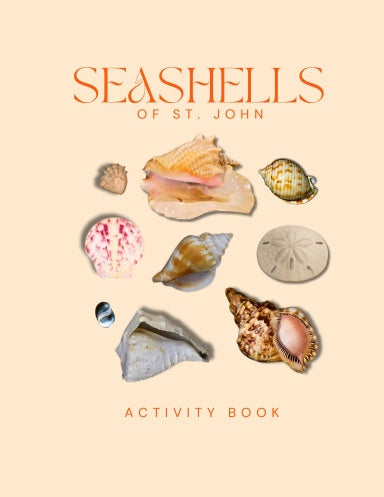 |
Make the Adventure Real The Seashells of St. John Activity Book turns your beach trip into a hands-on mission for ages 7–12 — with a shell tracker, fun facts, drawing pages, games, and puzzles. Shop the Book |
Family Tips for Shelling in St. John
- Go early, at low tide. The best shells appear at the tide line, and they get picked over as the day goes on. Check a tide chart and aim for the hour or two around low tide, early in the morning.
- Search the wrack line. The wavy line of seaweed, coral bits, and debris left by the highest tide is where shells collect. Walk it slowly and look closely — the small treasures hide in the tangle.
- Look after a storm. Wind and waves push shells up from deeper water. The morning after rough weather is often the best shelling of the whole trip.
- Leave the living ones. If a shell still has an animal inside — or a hermit crab has moved in — put it back. The rule is simple for kids: empty shells only, living creatures stay home.
Frequently Asked Questions: Shelling in St. John with Kids
What is the best beach for shelling in St. John with kids?
For calm, shallow water that's easy for young children, start with the sheltered, reef-protected beaches on the list above. For the widest variety of shells, the beaches facing open water get stronger surf that brings in more finds. Early morning at low tide is the best window anywhere.
What is the Kitten's Paw?
The Kitten's Paw is a tiny, rounded shell with soft ridges that really does look like a little cat's footprint. The animal picks one spot when it's young and stays attached there for its whole life, filtering the water clean. Their small paw-shaped shells are a favorite find for kids combing St. John's quiet national-park beaches.
When is the best time to go shelling in St. John?
Shelling is good year-round in St. John's warm water, but the best finds come the morning after windy or stormy weather, when waves push shells ashore. Early morning at low tide is the prime window any day, before the beaches fill up.
What shells can we find in St. John?
Common finds include the Queen Conch, Fighting Conch, Hawkwing Conch, King Helmet, Scotch Bonnet, Turkey Wing, Calico Scallop, Kitten's Paw, Nerite, and Atlantic Triton's Trumpet. Sand dollars turn up on sandy, low-tide flats. The Seashells of St. John Activity Book pictures all twelve so kids can match what they find.
Can you take shells from the beach in St. John?
Empty shells collected in small amounts for personal keepsakes are generally fine, but never take a shell with a living animal inside, and never remove live Queen Conch or disturb sea turtles; note that in Virgin Islands National Park, taking even empty shells is discouraged — look, photograph, and leave them. When in doubt, take a photo instead — it lasts longer and leaves the beach for the next family.
Turn Your Beach Trip Into a Real Exploration
Give your kids a mission before you hit the beach. Our Seashells of St. John Activity Book is a beach journal for ages 7 to 12 — with a shell tracker, fun facts about each species, drawing pages, games, and puzzles.
Heading to more than one island? Explore the whole Caribbean Seashells collection — each book maps the best shelling beaches for that destination.
0 comments